In the worst economy since the Depression, a trade school graduate with no backup plan quit his job, bet on himself, and built his first company.
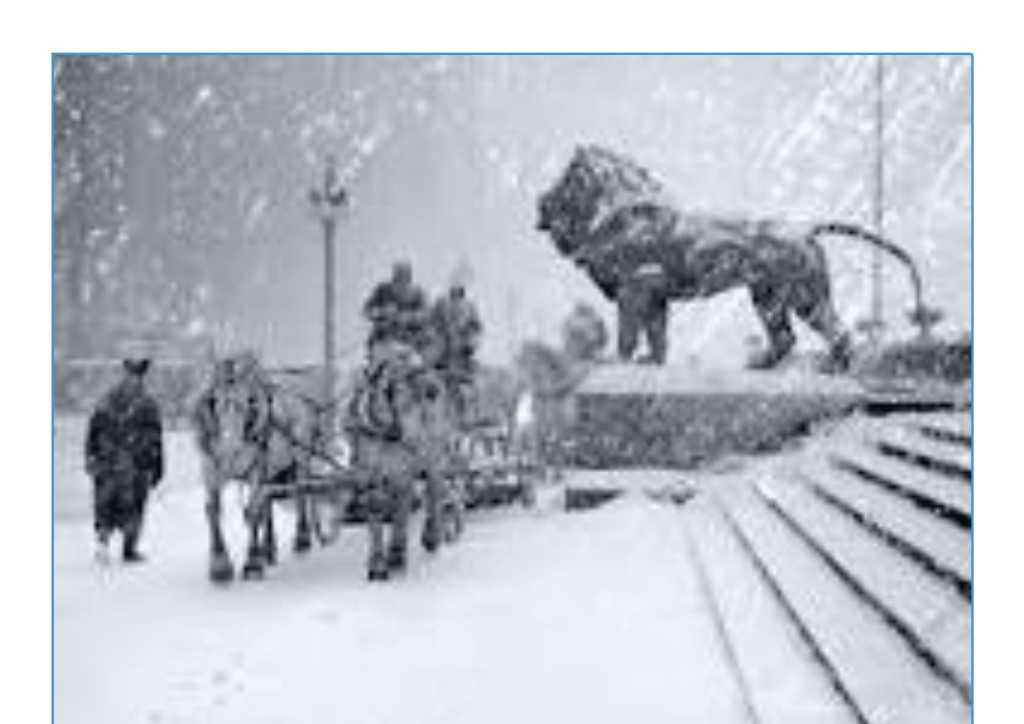
In the winter of 2009, the U.S. economy was in the depths of the Great Recession, its worst crisis since the 1930s. Job losses were accelerating past 700,000 a month. Unemployment hit 7.6% in January. GDP was in freefall. Credit had seized. The housing market was collapsing, and the financial system was shaking at its foundation.
I had just been promoted to Director of Technology at Farm Journal Media after graduating from the University of Illinois Executive MBA program. The role required me to be on-site in Chicago. So I left my wife in Champaign-Urbana, where she was finishing her PhD in Nutrition. The program was brutal. She wasn't sure she would graduate. I wasn't sure what came next.
We wanted a big family. She was 30. I was 35. The math for having a baby was not getting easier.
Imagine standing at the edge of a canyon filled with morning fog. You can't quite see the path forward, but the drop is steep. You are looking for a glimpse of a path that you could safely trek to your destination. Patience. I did what I always do. Focus on the knowns and ignore the noise and unknowns. Wait for the fog to clear. The answer had not yet revealed itself.
This decision was no different from any other I had faced. But that year was more brutal than anything I carry in 2026. What was coming was going to be one of the biggest decisions of my life.

It was 1998. The world was preparing for Y2K, living in fear that every system on earth would crash the day after New Year's. The elevator. The power grid. Everything. No one really knew, but the fear was compounding as we inched toward 2000.
Seven years had passed since I graduated from high school, and I had been bouncing between colleges, starting over more than I should have. My parents' patience had worn thin. My mom gave me an ultimatum.
Unlike many households in our community, my mom was the breadwinner: a nurse, while my dad worked as an electrician. Her career is what made it possible for us to come to this country. My parents left behind their whole extended family and every friend they had to build a better life for my brother and me. At least that is the story I tell myself. What I felt was the full weight of their journey and their sacrifice, and all I had to show for it was a job at the mall—the kind of work anyone without a degree could take. For them, a college degree was the gold medal; I was settling for the participation trophy. As the oldest child, I also carried the expectations of my parents' friends and family back home—living proof that their decision to come here was the right one.
My mom's father was a schoolteacher who died when she was very young. That death left a strong impression on her — she was the second oldest, left with her mom, five sisters, and two brothers in a culture where a man's absence changes everything. Education was how the family could survive and be successful. My uncle held a management role at the Bank of Kuwait — he had the pull to get me a position there. Reflecting back, my mom had been talking to him and my aunt for some time. I knew my life was going nowhere, but it wasn't going to Kuwait.
The decision was made: Chubb Institute.
This is my last chance.
I was never a great student in high school. I dropped out of six colleges, each time starting over because my grades were too bad to continue. The only path forward was to start again. Chubb was me starting over — and I had something to prove. Chubb Institute was where I learned computer programming. For every program we wanted to write, we had to draw a flow diagram and account for every decision point. We broke steps down to the micro level because the mainframe doesn't know what you meant — only what you said.
This approach became the cornerstone of my development. Pencil and paper. Lead on paper slowed me down, forcing me to think through each step and consider every scenario.
I found purpose. But the purpose wasn't enough. I know myself — I follow passion, and I needed to find the spark. It came when I started debugging, not coding. Mainframe debugging is not like debugging today. There were no breakpoints to walk through. It was meticulous and tedious. Every detail mattered. What we'd end up with after hours of work was a missing colon. A typo. The process taught me patience.
While I was falling in love with school, my test grades weren't reflecting it. I was back on top of the canyon, looking down, about to fail out again.
Right there, I decided: no more. This is not where it ends.
Getting back into the program meant coming up with $3,000 and reapplying — and I had one month to do it. If I didn't, my mom would know something was wrong. I couldn't go to them for money. So I did what I do best. I went to work. Three jobs at the mall, minimum wage. It was not easy — and I considered quitting. But that was the easy way out. No more.
I was scrambling for every shift, chasing every extra hour. Seventy, eighty hours — who knows how many. Everything else was gone. My entire existence narrowed to one goal: $3,000. I finally got there.
I was back in school.
I eventually graduated from Chubb Institute's COBOL Programming program, with electives in client-server development.
While I got the diploma, Chubb Institute transformed me as a person.
I found passion and direction. No more malls. I am earning my right to be the first — and eventually become the rock my family needs me to be.
Chubb landed me two interviews: one with Pharm Journal and one with a pharmaceutical company just outside Philadelphia.
The pharmaceutical company's role was primarily mainframe support using COBOL. Pharm Journal Media was different — they were looking for someone with a client-server background, which happened to be exactly what my electives covered. But Pharm Journal was different in another way: I couldn't find any mention of this company online. I had no idea how to prepare, and that was adding to my stress.
Work was nothing new to me. I had been working since I was fourteen. It had always been my escape from the realities of being the first.

My first interview was with Pharm Journal Media. The company was located in downtown Philadelphia. I remember getting off the train and navigating the labyrinth under City Hall, riding the escalator up to street level, and making my way to the building. The whole experience was overwhelming — the only offices I had ever worked in were local malls. There was only one floor.
I pressed the elevator button for the 27th floor. The ride felt like it took forever. The doors finally opened — to two enormous corn stalks.
It was at that moment that I realized why I could not find this company anywhere online.
The company name was Farm Journal Media. Not Pharm. Farm.
To this day, I still don't understand how I missed that. I'm sure the job posting said Farm, not Pharm. I digress.
The people interviewing me were Bryan Hill and Mark Emery. I don't remember much of what Bryan asked. But Mark is forever etched in my soul. I didn't know it then, but he would become one of the biggest influences in my life.
Mark asked me many questions, but I felt compelled to be transparent. I told him I wasn't qualified. The job asked for X, Y, and Z. I told Mark I had two days of X, one day of Y, and was still working on Z. I'm using letters because the point is simple: I was not qualified. I was a mess. I still don't know what he saw in me.
At that point, Mark pivoted to a completely different interviewing style. He asked me if I liked to work hard. Yes, of course. Did I like to have fun? I didn't even know how to answer that. Yes, of course.
The rest of the interview was a blur. I got to meet others, and they were friendly.
The one memory I have going back down that elevator is this: I just landed this interview.
That turned out to be almost the last formal interview I had that led to a job until April 20, 2026.
I went to my second interview and passed that one too. I had offers from both places. Farm Journal Media offered me $32K. The pharmaceutical company offered $42K plus a signing bonus.
These were life-changing salaries — I had worked three jobs and countless hours just to get $3,000 to go back to school. This was a 9-to-5. No more smelling like cheesesteaks or hoagies. This was a real job my mom could tell her family about.
One thing you need to understand: COBOL programmers were in high demand in 1998. They were on the front lines of implementing changes to the mainframe to address the Y2K bug, commanding $80K salaries.
I spent the weekend talking to my doctor friends — because, you know, I'm Indian, so obviously I have doctor friends. They were all pushing me to take the pharmaceutical offer. They were chasing the money. I was chasing something else.
I took the Farm Journal Media job. That decision changed the trajectory of my life.
One thing you should know about me: I don't follow money — I follow my heart. This is something I learned from my mom as she shifted between nursing jobs.
My days at the Hoagie Co taught me that work is my way of changing my realities. For that power to surface, I need to be invested in the people I work with, not for. It's about connecting to the people in the trenches and giving them a voice. This decision was about fit — my connection to Mark Emery and everyone else I met that day, regardless of the financial offer. I had a sense of home.
Eventually, Farm Journal Media became affectionately known as the Farm.
A few days into the job, I was asked to make changes on the command line. I literally called my tech-savvy younger brother for help.
Mark — what were you thinking?
It might have been the Yuengling and tequila chaser. That was his drink of choice. And if you ever see me drinking Yuengling or tequila, Mark is the reason.

The stock market hit its lowest point in March 2009. I was close to finishing my Executive MBA from the University of Illinois. Rose Ann and I had been rethinking when to start a family, and Champaign-Urbana had started to feel like the right place to build one. I had just been promoted to Director of IT at Farm Journal. I knew they wanted to keep me. The problem was that they never offered to pay for my education. That was noted — and it meant there was no loyalty binding me to stay.
I believed my best window to network was while I was still in the program. The job market was bleak, and if I was going to make a move, it had to be now. So I started interviewing. I kept getting to the final round, only to be told that someone else was a better fit.
And then came the news: Mark Emery was being let go.

Mark was the person who brought me into Farm Journal. For most of my time at the Farm, I looked up to him. He was the father figure.
He showed me that you can work hard and be a family.
In my eyes, he was amazing. I learned so much from him. I miss him.
As the years passed, he became a shadow of that man, slowly declining into alcohol. The person I had looked up to was barely able to function.
Until his end, I only remembered the man who gave me my first break. The guy who took a chance.

The tension around starting a family was building. The MBA was done. I had told myself during the program that I had eighteen months to do something drastic — because the world gives an MBA a shelf life. If you don't use the momentum, it fades. The Director role was a shift, but it wasn't what I was looking for. I was also thinking about Rose Ann. If I stayed at Farm Journal, she would follow me. I wanted her to choose something that made her happy. I had told her since day one: if I have two hands, I will always find a way.
During the MBA, my cost accounting professor ended a session with a question: Are people born lucky? His theory was that some people simply position themselves for luck. That question echoed in my soul and became one of my truths.
December 5th came. Hyler, my boss, called me into his office. Mark was my anchor to Farm Journal — and I was drifting away. I quit.
Similar to Porter, I needed roughly $65,000 to live in Champaign-Urbana until Rose Ann graduated. The question was how to get it.

Back in 2004, things were getting more serious with my future wife. We were starting to talk about marriage, and I hadn't graduated from college. My mom still believes to this day that my life changed because of my wife. What she doesn't realize is that my life changed with her ultimatum. A year into Farm Journal, I had already recognized the weight of not having a degree. The imposter syndrome was real. Education was my way out.
My Chubb experience has taught me the value of a degree. I started at Drexel, then transferred to Villanova, going part-time. To take the future seriously, I needed to graduate — and fast. What my wife did was change the pace.
They never replaced me. They kept me as a consultant.
I graduated in May 2005. I got married that same month.

Don't get me wrong — there was real fear. I was walking away from a job most people would have held onto for dear life. I was safe. Protected. But the MBA had taught me something: don't play it safe. Be bold.
Knowing I only needed $65K gave me a floor. If everything fell apart, I could work at Walmart in Champaign-Urbana and still make it for over 2 years. So instead of drowning in fear, I understood it. I reframed it.
The MBA transformed me into a strategist. And a strategist doesn't fixate on fear — he maps risk. What I needed to understand was my leverage.
And I knew how companies behave. A fundamental belief I carry to this day: people lie, but behaviors don't. The 2004 experience had already taught me the pattern — Farm Journal would wait until the last minute, then hire me as a consultant. The offer I put in front of them was one they couldn't refuse.
To the world, Shiren was crazy — quitting during a recession. But I knew the truth. I had positioned myself to be lucky.
I hacked life again.

I was blessed with my first daughter and I never saw a bigger smile on my mom.